Moving to Conroe, TX: Essential Tips for New Residents in 2026
Moving to Conroe, TX: Essential Tips for New Residents in 2026
Moving to Conroe TX in 2026 means joining one of the fastest-growing cities in the Houston region. According to U.S. Census Bureau QuickFacts, Conroe’s population increased by about 26% between 2010 and 2020, outpacing Texas overall. That surge continues as new master-planned communities, retail centers, and employers expand along Interstate 45 and Highway 105. Understanding neighborhoods, commute patterns, schools, recreation, and cost of living helps new residents make confident decisions before keys change hands in this rapidly evolving market.
Which Conroe neighborhoods fit different lifestyles in 2026?
Neighborhood selection shapes daily life after moving to Conroe TX. The Grand Central Park community off Interstate 45 offers newly built homes, wooded greenbelts, and a quick drive to Downtown Conroe’s historic Courthouse Square. Farther west toward Lake Conroe, subdivisions like Watercrest at Lake Conroe and April Sound emphasize water access and resort-style amenities. According to Redfin data through early 2026, many entry-level single-family homes around central Conroe trade in the approximate range of $260,000 to $350,000, depending on age and lot size.
On warm evenings, the streets around Heritage Place in Downtown Conroe glow under string lights from local spots like Pacific Yard House and Corner Pub. The aroma of grilled food drifts past brick facades, mingling with the smell of craft beer and fresh popcorn from the Crighton Theatre during live shows. Musicians tuning guitars send soft echoes down North Main Street, while the textured red-brick sidewalks and faint vibration of passing freight trains reinforce the area’s blend of small-town charm and steady energy.
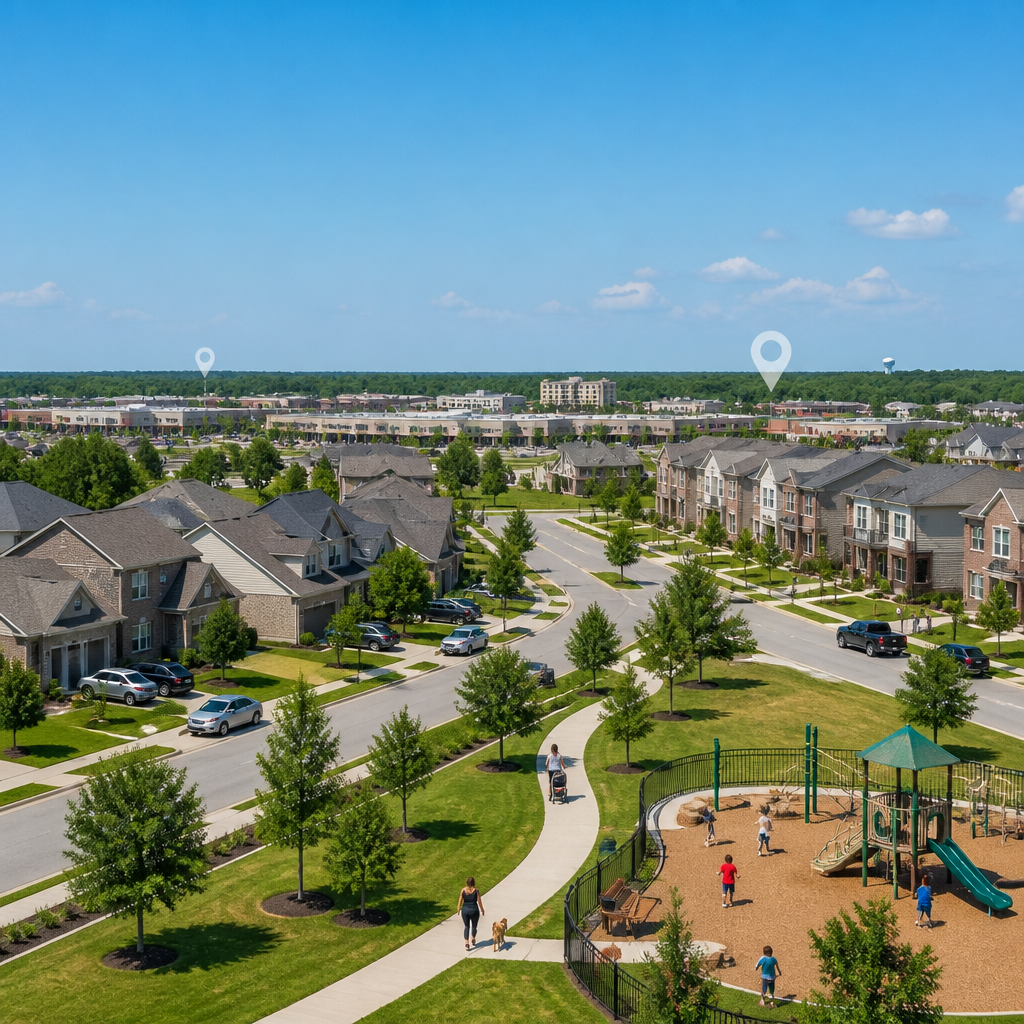
Families often focus on established areas such as River Plantation along Interstate 45 or newer developments like Artavia and Woodforest closer to FM 1488. These neighborhoods frequently fall within Conroe Independent School District boundaries and offer community pools, playgrounds, and trail systems. According to community overviews from Visit Conroe, major master-planned communities integrate retail, schools, and parks within about 1 to 3 miles of most homes, reducing daily driving for errands.
Renters also find options in multifamily communities along South Loop 336, Longmire Road, and West Davis Street. According to market summaries from Apartments.com, many one-bedroom units around Conroe lease in a broad range from roughly $1,100 to $1,500 per month as of late 2025, depending on age, amenities, and proximity to Lake Conroe or major employment corridors. Townhome developments near Grand Central Park and The Woodlands border offer additional choices for residents seeking lower-maintenance living.
How challenging is commuting in and around Conroe?
Daily travel shapes quality of life for anyone moving to Conroe TX, especially those working across Montgomery County or in Houston. According to American Community Survey estimates for recent years, typical one-way commute times for Conroe residents average around 30 minutes. Interstate 45 serves as the primary north–south spine, connecting Conroe to The Woodlands in roughly 15 miles and central Houston in approximately 40 miles, depending on the specific route.
The loop system around Conroe, including South Loop 336, North Loop 336, FM 2854, and Highway 105, distributes traffic between residential, industrial, and retail zones. According to travel analyses from the Houston-Galveston Area Council, congestion typically peaks during morning and late-afternoon rush periods near major interchanges. Residents commuting toward the Energy Corridor or Uptown Galleria often plan departures 30 to 45 minutes earlier during severe weather or major events along the corridor to maintain predictable arrival times.
Public transportation options remain more limited than in central Houston, but park-and-ride services help some workers. The Gulf Coast Regional Transportation Authority and local partners operate commuter routes linking Conroe Park & Ride facilities with The Woodlands and downtown Houston during weekday peak hours. Bike and pedestrian infrastructure continues to expand, particularly around Downtown Conroe, Candy Cane Park on North Park Street, and the trail systems near Carl Barton Jr Park off FM 1314, giving close-in residents alternatives for short trips under about 3 miles.
For regional and business travel, Conroe-North Houston Regional Airport on Airport Road provides general aviation services and corporate flight operations. According to airport statistics posted by the City of Conroe, annual operations exceed 90,000 takeoffs and landings in recent years, underscoring the facility’s growing role for corporate users. George Bush Intercontinental Airport, located roughly 30 to 35 miles south via Interstate 45 and the Hardy Toll Road, handles most commercial flights for Conroe residents.
What should new residents know about schools and education?
Education remains central to relocation decisions, and moving to Conroe TX brings access to several public and private options. Conroe Independent School District serves much of the city, including Conroe High School on Tiger Trail and Caney Creek High School on FM 2090. According to GreatSchools data from 2025, Conroe High School holds a rating of 6/10, with higher marks in college readiness and advanced coursework participation compared with some regional peers.
Lone Star College–Montgomery, located approximately 10 miles south along College Park Drive, provides associate degrees, workforce certificates, and university transfer pathways. According to enrollment reports from Lone Star College, campus headcount exceeds 10,000 students annually, serving both traditional and returning learners from Conroe, Willis, and The Woodlands. Nearby Sam Houston State University’s The Woodlands Center along I-45 further expands options for upper-division and graduate study within about a 25-minute drive in typical traffic.
During afternoon dismissal at Giesinger Elementary on White Oak Boulevard, the sound of children’s laughter spills across the tree-shaded sidewalks while crossing guards whistle cars to a halt. The scent of freshly cut grass from the playing fields lingers in the warm air, and backpacks thump against brick walls as students wait along Silverdale Drive. Nearby, parents talk over the hum of idling vehicles, and the bright yellow buses lining the curb catch the late-day sun, giving the whole block a calm, orderly rhythm.
Private and faith-based schools in and around Conroe add further choice. Institutions such as Covenant Christian School on Higdon Road and Lifestyle Christian School near FM 1484 enroll students from pre-K through high school. According to reviews compiled by Niche, several Conroe-area schools receive grades in the B to A range for academics and college prep as of 2025. This mix allows households to align educational priorities with specific neighborhoods, transportation needs, and tuition budgets.
How do parks, recreation, and local amenities shape everyday life?
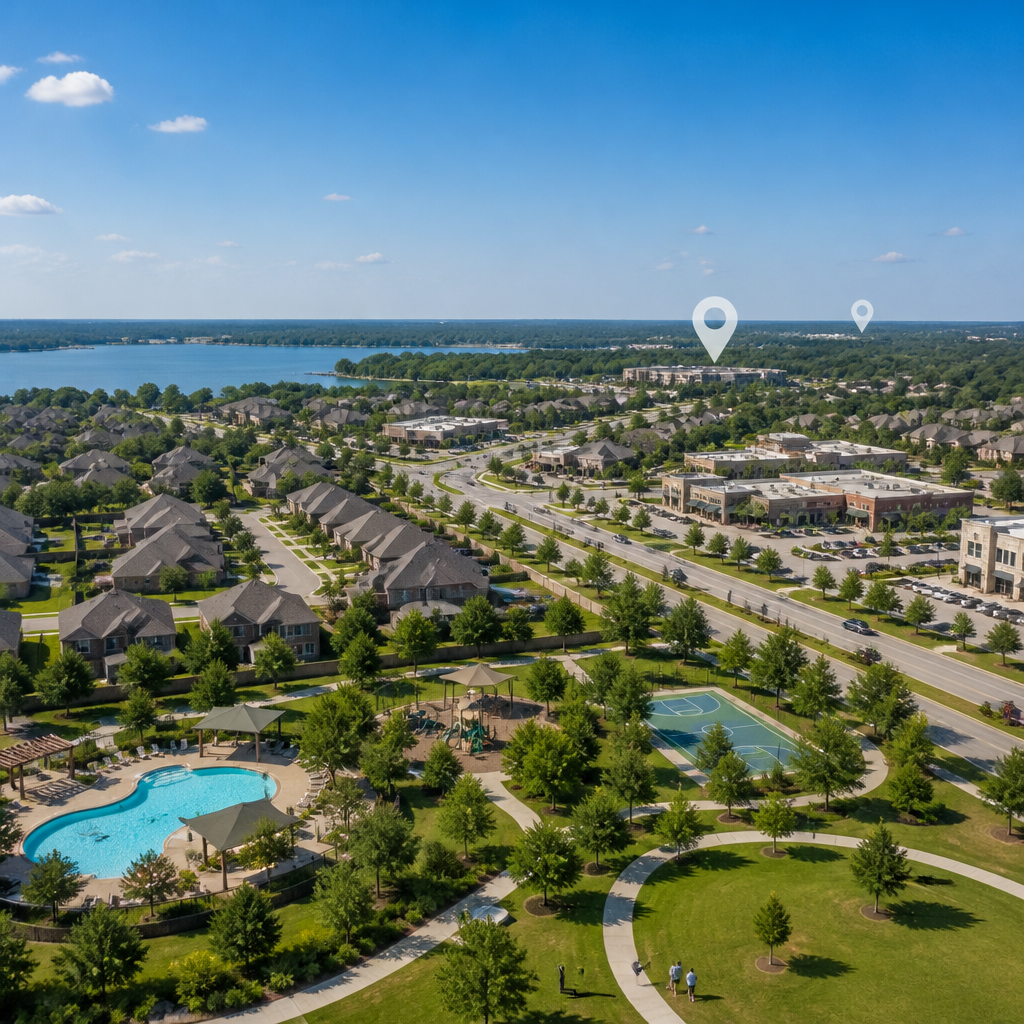
Many residents moving to Conroe TX prioritize outdoor recreation, and the area’s natural assets stand out. Lake Conroe, stretching about 21,000 surface acres according to the Texas Parks and Wildlife Department, supports boating, fishing, and lakeside dining. Sam Houston National Forest, northwest of the city, offers miles of hiking and off-road trails within a 20 to 30-minute drive from most Conroe neighborhoods. These destinations provide weekend escapes without extensive travel, especially for households balancing busy work and school schedules.
Candy Cane Park on North Park Street features playgrounds, walking paths, and the Heritage Museum of Montgomery County, giving residents a blend of recreation and local history. Carl Barton Jr Park along FM 1314 includes multi-use sports fields, a fishing lake, and a disc golf course. According to facility listings on the City of Conroe Parks and Recreation site, the department manages more than 25 parks and over 7 miles of developed trails, with additional projects under design for 2026 and beyond.
Daily conveniences also matter. Grocery options include the H-E-B on South Loop 336, Kroger on West Davis Street, and Walmart Supercenter off North Loop 336. Restaurant clusters around West Davis Street, Frazier Street, and along the Lake Conroe shoreline feature everything from Tex-Mex at Rancho Grande on West Dallas Street to lakeside dining at Fajita Jack’s on Lake Conroe Drive. According to Walk Score, Conroe holds an overall walk score of about 24, but central blocks of Downtown Conroe score significantly higher because of concentrated businesses.
What does the cost of living and housing landscape look like?
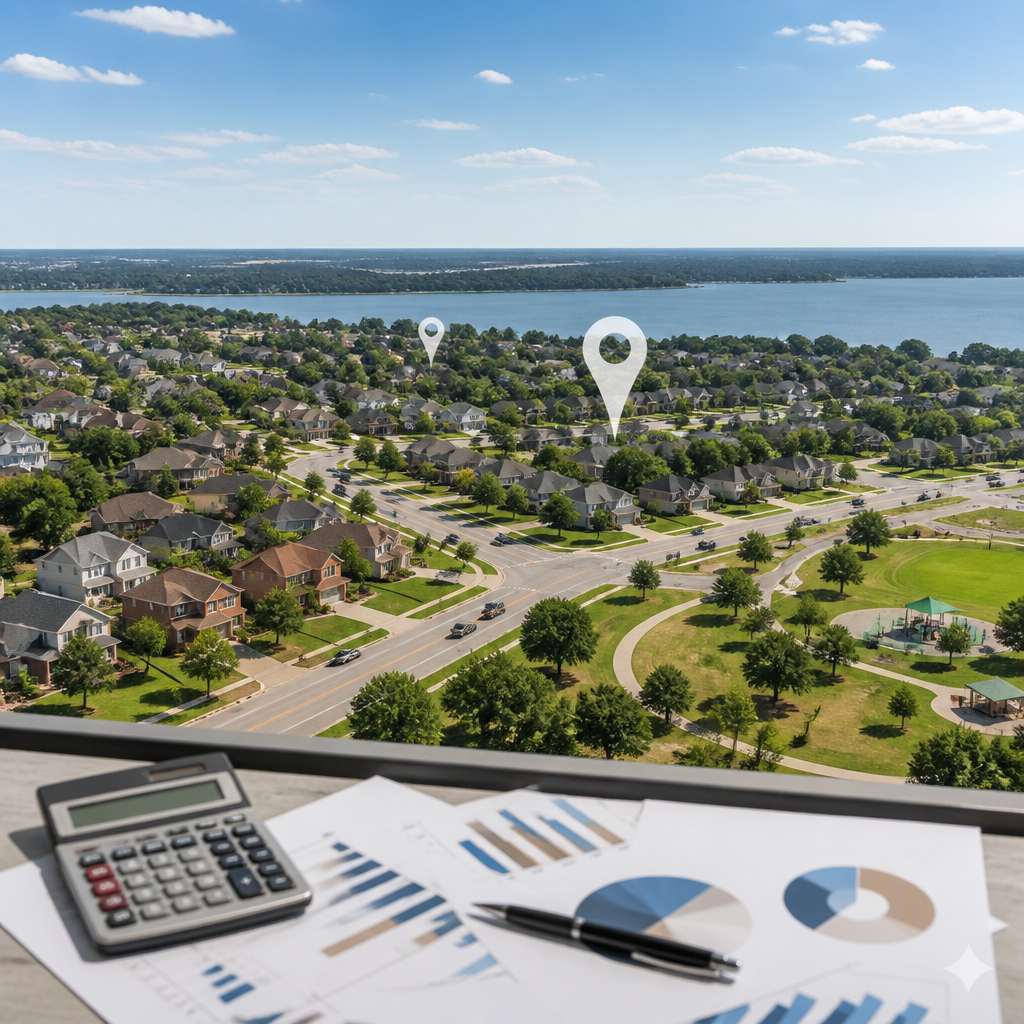
Cost of living plays a central role for anyone moving to Conroe TX. According to cost-index comparisons from BestPlaces, overall expenses in Conroe typically register around 5% to 10% below the national average as of 2025, driven mainly by housing costs. Redfin’s Conroe market summary for early 2026 notes that many move-in-ready single-family homes fall broadly within the $260,000 to $420,000 range, with larger properties near Lake Conroe and custom builds in Woodforest commanding higher prices.
Property taxes contribute significantly to monthly budgets. According to the Montgomery County Tax Assessor-Collector, combined effective tax rates for many Conroe-area properties often land between approximately 2.2% and 2.8% of assessed value, depending on specific jurisdictions and exemptions. That means a home assessed at $350,000 might carry an annual property tax bill in the range of roughly $7,700 to $9,800, before homestead or other eligible reductions are applied.
Renters face their own budgeting considerations. According to apartment listings aggregated by RentCafe through late 2025, average monthly rents in Conroe often fall between about $1,250 and $1,500, with newer complexes near Grand Central Park, South Loop 336, and The Woodlands corridor trending toward the higher end. Utility costs, including electricity for summer air conditioning, typically align with regional norms and vary based on home size, insulation quality, and thermostat settings.
Insurance also affects long-term affordability. Proximity to Lake Conroe, creeks like the West Fork of the San Jacinto River, or lower-lying sections near the Lewis Creek Reservoir can influence requirements for flood coverage. According to guidance from the Federal Emergency Management Agency, flood insurance premiums may range widely, from a few hundred dollars to several thousand per year, depending on specific elevation certificates and risk zones. Prospective residents often compare several insurers before finalizing a purchase contract or lease agreement.
The 26% population growth cited at the start of this guide reflects more than simple statistics; it signals intense demand for homes, schools, and services as Conroe enters 2026. That same 26% expansion underscores the importance of understanding neighborhoods, commute routes, and ownership costs before commitments are made. The Houston Association of Realtors Conroe market trends dashboard provides detailed, frequently updated data on listings, price ranges, and days on market. Buyers who begin monitoring that resource in early spring, register listing alerts, and schedule property tours within 48 hours of promising homes hitting the market before the Q2 activity surge typically secure stronger negotiating positions, while those delaying action until late summer often face tighter inventory and heightened competition.